MANAGEMENT OF PESTICIDE RESIDUES IN AGRICULTURE
At the end of crop protection treatments, agricultural sprayer tanks often retain unused pesticide residues, frequently at high concentrations. In the absence of effective on-site treatment solutions, these waste streams may be improperly discharged or inadequately disposed of, causing point-source contamination of soils and groundwater. Current regulations require rigorous management of these residues, yet effective in-situ treatment solutions remain limited.
WHAT IRRAOP IS
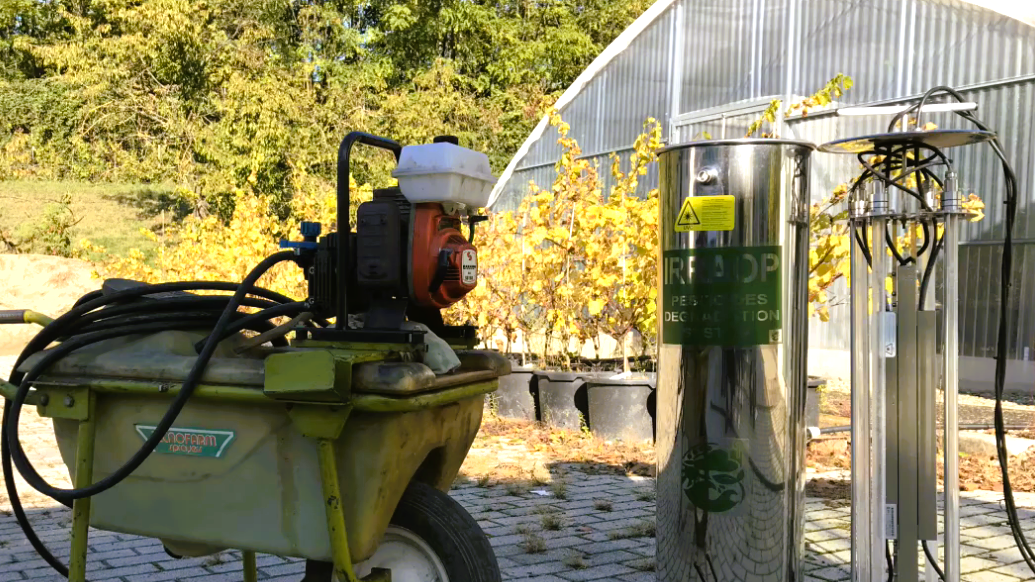
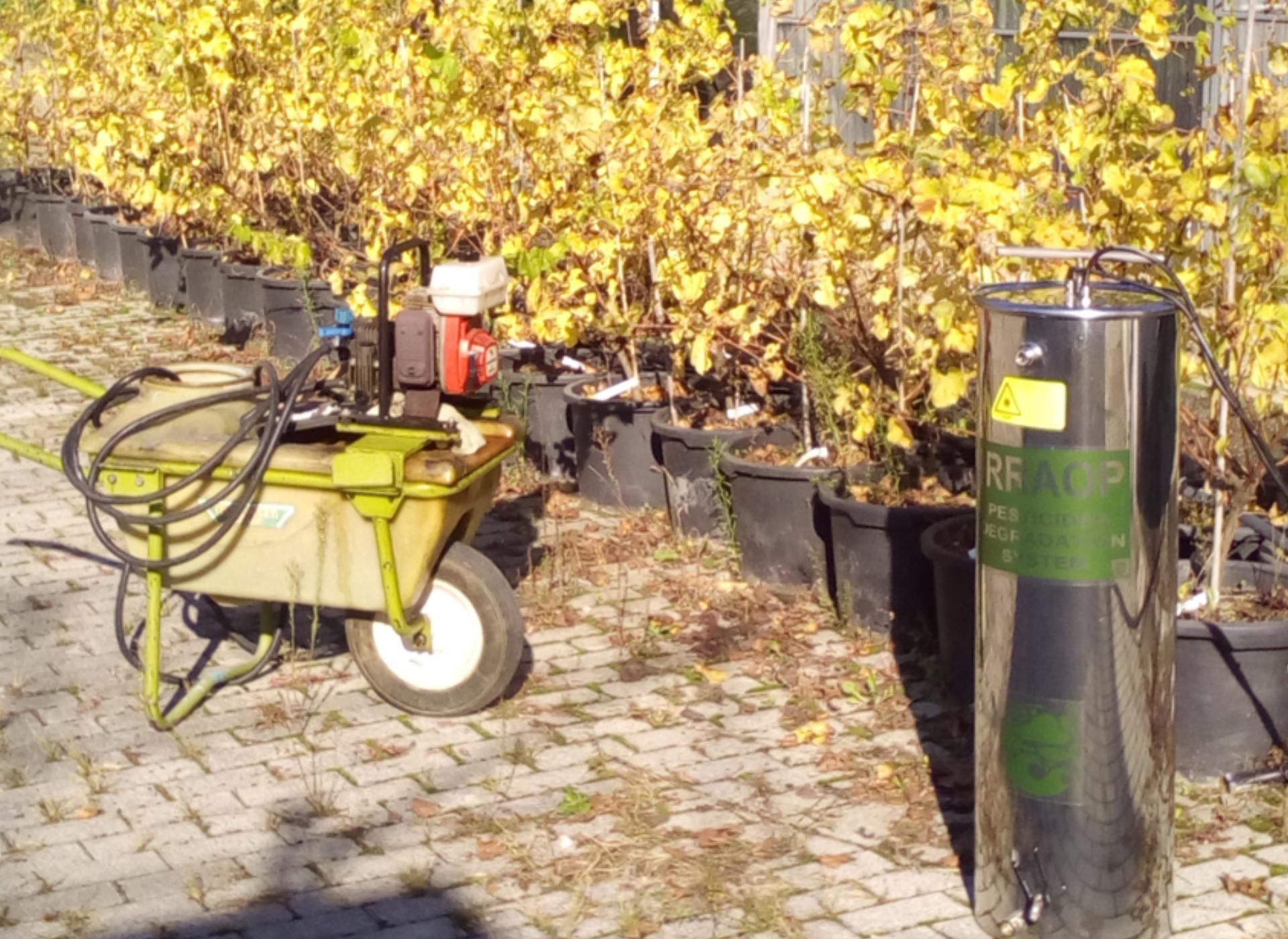
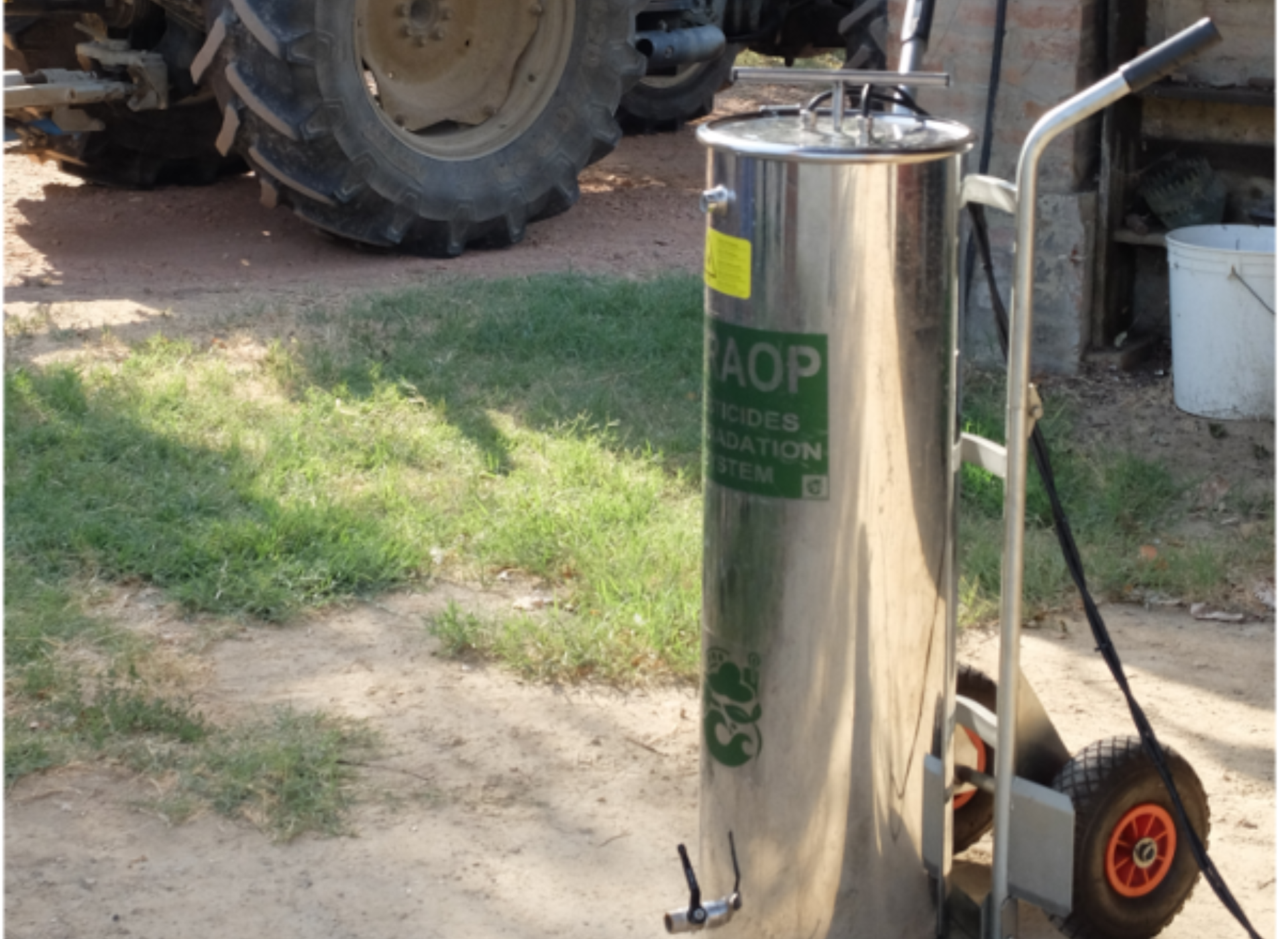
IRRAOP is a PROAMBIENTE-patented system designed for the degradation of agrochemical residues in agricultural sprayer tanks.
Developed for direct treatment of contaminated wastewater, the system reduces pollutant concentrations prior to disposal through Advanced Oxidation Processes (AOPs) based exclusively on energy-driven treatment mechanisms, without the use of chemical additives.
TECHNOLOGY EMPLOYED
IRRAOP integrates:
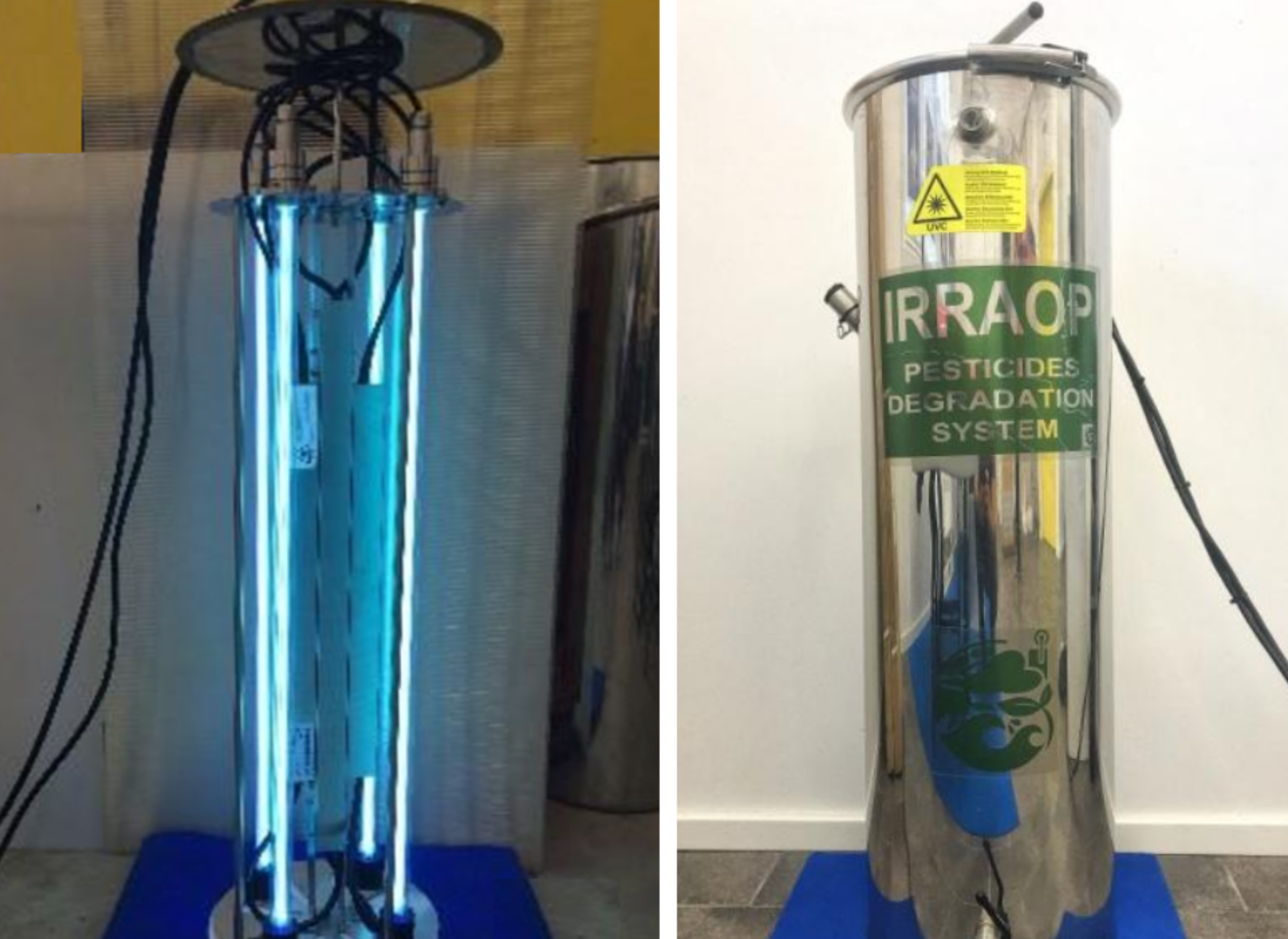
- 20 W UV lamps immersed directly in the wastewater to be treated
- direct UV irradiation to activate oxidation processes
- chemical degradation of organic compounds without the use of chemical reagents
The system is effective on the main classes of plant protection products, including herbicides, insecticides and fungicides.
IRRAOP can treat up to 70 litres per cycle, with irradiation times ranging from 1 to 6 hours, depending on the chemical persistence and degradation resistance of the target compounds.
APPLICATION AREAS
- agricultural enterprises
- professional contexts involving pesticide use
- sprayer wastewater management
- environmental sustainability projects in agriculture
WHAT YOU GAIN
- significant reduction of pesticide residues
- lower waste management and disposal costs
- mitigation of point-source environmental contamination
- improved agricultural sustainability performance
Interested in sustainably managing pesticide residues in your agricultural operations?
Contact us to assess the implementation of the IRRAOP system within your operational context